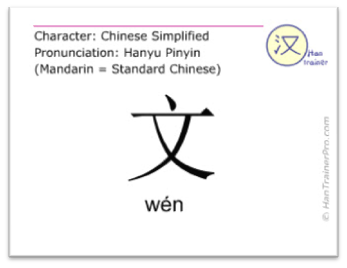
This week we explored select pieces of ancient Chinese literature, specifically some excerpts from the Classic of Poetry, as well as some quotes and writings of Confucius (taken from the Analects, or selected writings). We were introduced to the concept ofwen, which is complex and possibly even alien to the Western mind. Wen is a term as old as the ancient Zhou kings, and the meaning probably evolved over time, as is true for most language. Today, it is often translated simply as writing, while in ancient texts it often meant accomplished ancestors (Von Falkenhausen, 1996).
Therefore, we must imagine the evolution of the term, where it started, and why it changed. We must delve into Chinese history, and understand the reverence placed on the founding ancestors of the Zhou kingdom, and what they meant in a historical context. Those accomplished ancestors provided the basis of culture, knowledge, art, and behavior for future Chinese civilization. The Zhou were idealized throughout the ages, and even romanticized. Therefore, wen as a term for writing is much deeper than it appears at first glance. It also means civilization, and the preservation and transmission of knowledge and cultural identity through writing.
Questions for teachers and students: Is wen strictly a Chinese concept? If so, why? If it is possible to apply the concept of wen to Western literature, what are some examples?
Wen is an interesting concept, and one that is necessary to investigate as part of any serious venture into Chinese literature and culture. I encourage everyone to explore the concept further by reading the excellent articles in the references.
References
Longxi, Z. (1996). What is wen and why is it made so terribly strange? College Literature, 23(1), 15. Retrieved from https://search-ebscohost-com.lopes.idm.oclc.org/login.aspx?direct=true&db=ehh&AN=9603264011&site=ehost-live&scope=site
Von Falkenhausen, L. (1996). The Concept of Wen in the Ancient Chinese Ancestral Cult. Chinese Literature: Essays, Articles, Reviews (CLEAR), 18, 1-22. doi:10.2307/495623
 Mokeymark 101