During the past 150 years, technology has shrunk the world more profoundly than at any other time in history. In less than ten generations, we have undergone the rise and fall of massive colonialism, two world wars, the industrial revolution, invention of the automobile and airplane, modern science, radio and telephone technology, and most recently, the rise of the internet and the explosion of social media. While there are still significant barriers separating people (political, ideological, geographical, and language, to name a few), we are in the midst of an unprecedented falling away of barriers and de-facto shrinking of the planet from a communication standpoint.
What does all that mean to the written word? Technology has led to cross pollination of literary genres, culture, and ideas. Global literature is a real thing. Some of the greatest writing, stories, and poems in all of history have been forged in the modern clash of cultures and ideas. Yes, the world can seem large from a cultural standpoint. Thankfully, globalization has not resulted in homogeneity. While there has been a massive sharing of ideas and knowledge (and sometimes cultural appropriation), mostly there has been exposure to people and cultures that are unfamiliar to us. This is a double-edged sword; sometimes leading to peaceful exchange and growth, and sometimes to focus on differences and the fomenting of new biases and hatred. This is human nature, and technology is not to blame. Social media can be used to stay in touch with family and loved ones regardless of geographical separation, and it can also be used to find, concentrate, and enable pockets of hatred and intolerance.
While only history will show whether the shrinking of the planet will result in peace and understanding on a large scale, passionate writers will be there to document and eloquently describe the effects and changes while they happen. Global literature will be the lens through which future generations will gain their understanding of this unique time in history.
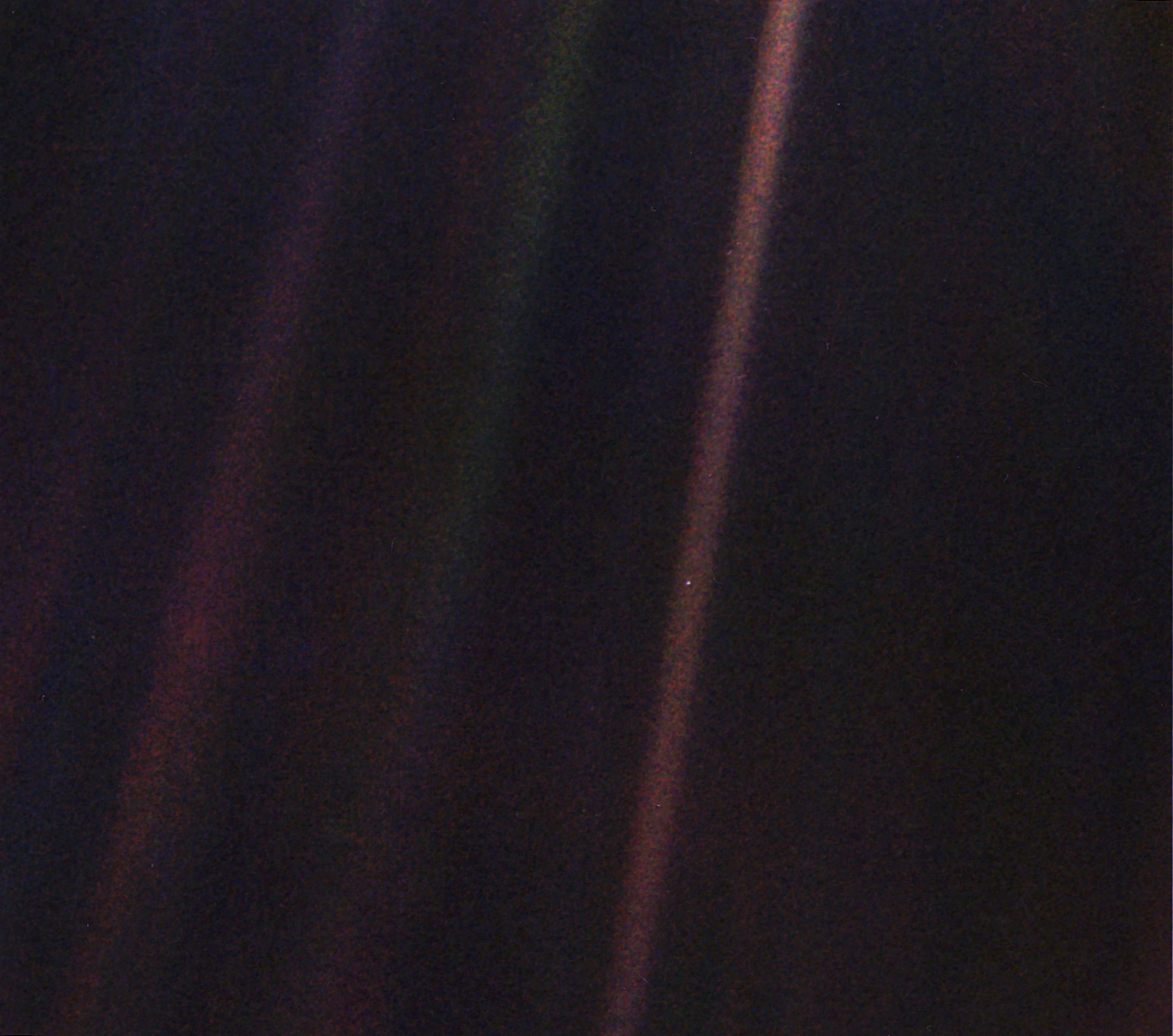
The image I chose for this post is the famous Pale Blue Dot picture, taken by the Voyager 1 spacecraft, looking back at the earth across a distance of 4 billion miles. The image inspired the late, great Carl Sagan to write an incredibly powerful essay about its significance. Read the essay and ask yourself what it means in terms of global literature. What are the implications of Sagan’s words to humanity? How can we use our own words to illuminate injustice, foster peace, or just to make this tiny blue dot a tiny bit better?





 Mokeymark 101
